What Is Epitalon?
Epitalon (also spelled Epithalon, Russian: Эпиталон) is a synthetic tetrapeptide with the amino acid sequence Ala-Glu-Asp-Gly. It is the biologically active component of Epithalamin, a peptide extract originally isolated from the pineal gland. In 2017, researchers confirmed that Epitalon exists endogenously in pineal gland extracts, validating decades of research into its natural role in the body.
Epitalon is widely regarded as the most researched synthetic anti-aging peptide in the world. Its primary mechanism — the activation of telomerase — directly addresses one of the most fundamental hallmarks of biological aging: telomere shortening. Studies report it can increase telomere length by an average of 33%, though results vary among individuals.
The Khavinson Legacy: Bioregulation Theory
Epitalon was developed by Professor Vladimir Khavinson at the St. Petersburg Institute of Bioregulation and Gerontology, where he spent over 35 years researching peptide bioregulators — short-chain peptides that regulate gene expression at the cellular level. Khavinson's central thesis is that aging is fundamentally a loss of peptide bioregulation: as the body ages, it produces fewer regulatory peptides, leading to progressive gene silencing and cellular decline.
His work on Epithalamin (the natural pineal extract) began in the 1970s with animal studies showing dramatic lifespan extension. By synthesizing the active tetrapeptide sequence — Epitalon — Khavinson created a standardized, reproducible compound that could be studied in controlled experiments. Over 100 peer-reviewed publications on Epitalon have emerged from his laboratory and collaborators worldwide.
Khavinson was nominated for the Nobel Prize in Physiology or Medicine in 2010 for his contributions to peptide bioregulation. His work bridges the gap between endocrinology, genomics, and gerontology — proposing that short peptides can "re-read" silenced genes and restore youthful cellular function.
Mechanism of Action: How Epitalon Works
Epitalon operates through multiple complementary pathways:
1. Telomerase activation (TERT gene expression): Epitalon induces expression of the TERT gene — the catalytic subunit of telomerase. This enzyme adds TTAGGG repeats to chromosome ends (telomeres), counteracting the progressive shortening that occurs with each cell division. When telomeres become critically short, cells enter senescence or apoptosis. By maintaining telomere length, Epitalon extends the replicative lifespan of somatic cells.
2. Chromatin remodeling and gene reactivation: Epitalon promotes decondensation of heterochromatin, effectively "unlocking" silenced genes — particularly Nucleolus Organizer Regions (NORs) that become inactive with age. A 2003 study (PMID: 14647006) demonstrated that Epitalon reactivates these silenced ribosomal genes in aged lymphocytes, restoring protein synthesis capacity.
3. Melatonin synthesis and circadian rhythm restoration: Through its action on the pineal gland, Epitalon stimulates melatonin production that naturally declines with age. This restores circadian rhythm integrity, improving sleep quality, hormonal balance, and the body's antioxidant defense (melatonin is one of the most potent endogenous antioxidants).
4. Antioxidant and immune modulation: Epitalon enhances endogenous antioxidant enzyme activity and has been shown to improve immune function in aged subjects, potentially through its effects on thymic peptide regulation and lymphocyte reactivation.
Scientific Validation: Peer-Reviewed Evidence
Epitalon is supported by a substantial body of preclinical and clinical research spanning over four decades. Below are five landmark studies that form the foundation of the evidence base:
★ Overcoming the Hayflick Limit (Khavinson, 2003): In the most cited Epitalon study, Khavinson demonstrated that Epitalon induces telomerase activity in human fetal lung fibroblasts — enabling cells to surpass the Hayflick limit (the maximum number of cell divisions). Treated cells showed a 1.6 to 2.0 fold increase in telomerase activity compared to controls, with correspondingly longer telomeres.
★ Lifespan Extension in Drosophila (2000, PMID: 11087911): Epitalon increased the lifespan of Drosophila melanogaster by 13.6% through modulation of oxidative stress resistance. This was one of the first in vivo demonstrations that a synthetic tetrapeptide could extend organismal lifespan.
★ Anti-Cancer Properties (2004, PMID: 15677927): A comprehensive carcinogenesis study demonstrated that Epitalon reduces spontaneous and chemically-induced tumor formation in mice and rats by up to 68%. This finding is particularly significant because telomerase activation is sometimes associated with cancer risk — Epitalon appears to selectively activate telomerase in normal somatic cells while suppressing tumorigenesis.
★ Reactivation of Silenced Genes (2003, PMID: 14647006): An in vitro study showed that Epitalon reactivates Nucleolus Organizer Regions in elderly human lymphocytes by decondensing heterochromatin. This suggests Epitalon can reverse a key epigenetic signature of aging — gene silencing through chromatin compaction.
★ Retinitis Pigmentosa Treatment (2002, PMID: 12195242): In a clinical study on patients with Retinitis Pigmentosa (a degenerative retinal disease), Epitalon stabilized or improved visual function in 90% of subjects. This represents one of the few human clinical applications with measurable endpoints, validating the retinal protection properties of pineal peptides.
Primary Benefits
• Telomere elongation and cellular lifespan extension — the core anti-aging mechanism
• Circadian rhythm restoration and improved sleep quality via melatonin synthesis
• Retinal protection and eye health — clinically validated in Retinitis Pigmentosa
• Anti-aging effects via reduced cellular senescence and gene reactivation
• Antioxidant defense enhancement through both melatonin upregulation and direct enzymatic effects
• Immune system modulation and thymic support in aged populations
• Potential anti-cancer properties through selective tumor suppression (shown in animal models)
Dosing Protocol
• Standard dose: 5-10 mg per day, subcutaneous injection (or intranasal spray)
• Cycle length: 10-20 days per course
• Cycle frequency: 1-2 courses per year, spaced 4-6 months apart
• Half-life: approximately 30 minutes — necessitates once-daily dosing for the duration of the cycle
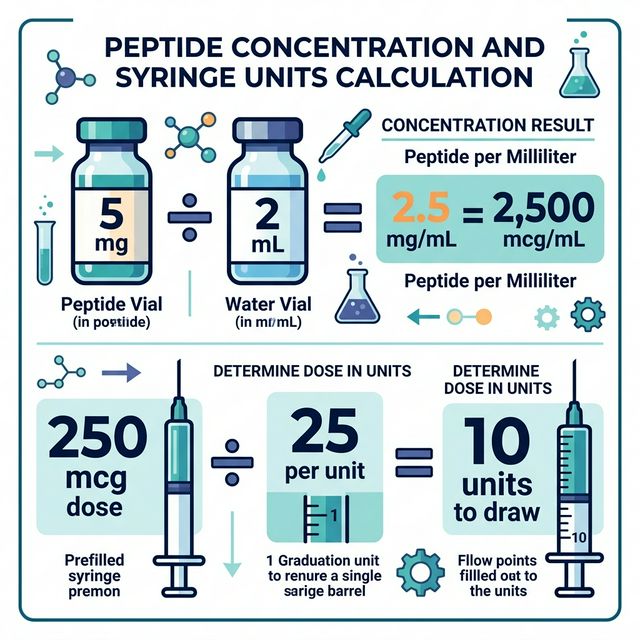
Typical vial size: 10 mg. Reconstitute with 1-2 mL of bacteriostatic water. With 2 mL of BAC water and a 100-unit insulin syringe, the concentration is 5 mg/mL (50 mcg/unit). For a 5 mg daily dose, draw 100 units (full syringe). For a 10 mg daily dose, use two injections of 100 units each.
Injection site: subcutaneous — abdomen, thigh, or upper arm. Rotate injection sites daily. Store reconstituted vials at 2-8°C and use within 21-28 days.
Other Longevity Peptides
MOTS-c (Mitochondrial ORF of the 12S rRNA Type-C): A mitochondrial-derived peptide that activates AMPK, improves cellular energy metabolism, and enhances insulin sensitivity. It represents a new class of "mitokine" signaling molecules. Studied at 5-10 mg subcutaneously, 3-5× per week. Half-life: approximately 16 hours.
SS-31 (Elamipretide): A mitochondria-targeted peptide that reduces oxidative stress by binding to cardiolipin on the inner mitochondrial membrane. Currently in clinical trials for mitochondrial myopathy (Barth syndrome) and age-related macular degeneration. Dosing: 0.25 mg/kg subcutaneously.
Important Context & Research Limitations
While Epitalon has the strongest preclinical evidence base of any anti-aging peptide, important caveats apply:
• Much of the foundational research originates from Russian-language journals and Khavinson's laboratory. Independent replication by Western research groups remains limited, though the studies cited above are all published in indexed, peer-reviewed journals.
• Large-scale, double-blind, placebo-controlled randomized trials in humans are lacking. The clinical data (such as the Retinitis Pigmentosa study) involves small cohorts.
• The concept of telomerase activation for anti-aging is biologically plausible and mechanistically well-supported, but its long-term clinical efficacy in healthy humans is not yet proven.
• The 2017 confirmation that Epitalon exists endogenously in pineal extracts strengthened the biological rationale considerably — this is not merely a synthetic construct but a peptide the body naturally produces.
As with all research peptides, consult a qualified healthcare provider before use.
The Future of Epitalon Research
Epitalon represents a convergence of multiple emerging fields: telomere biology, epigenetics, peptide bioregulation, and chronobiology. As the broader scientific community increasingly recognizes telomere length as a biomarker of biological (rather than chronological) aging, interest in telomerase-activating compounds has surged.
Key areas of ongoing investigation include: the interplay between Epitalon and the epigenetic clock, its role in neurodegenerative disease prevention, the mechanisms behind its selective anti-tumor effects, and the development of optimized delivery systems (including intranasal and oral formulations) that could improve bioavailability beyond the current ~30-minute half-life.
Use our Reconstitution Calculator to calculate your exact Epitalon dose and syringe units, and the Half-Life Visualizer to model its rapid clearance kinetics.