Glutathione
The body's master antioxidant — a tripeptide critical for detoxification, immune function, and cellular protection.
🔬 Mechanism of Action
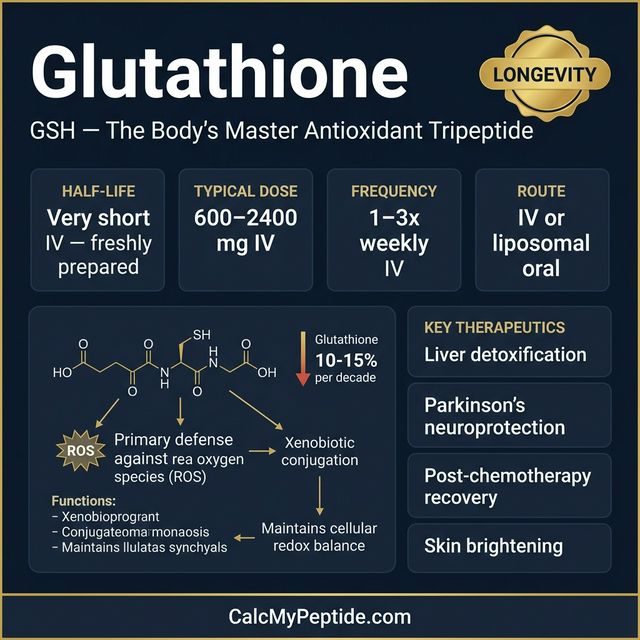
Glutathione (GSH) is a tripeptide (L-glutamate, L-cysteine, glycine) and the body's primary endogenous antioxidant. It exists in reduced (GSH) and oxidized (GSSG) forms, and the GSH:GSSG ratio is a key indicator of cellular health.
Glutathione directly neutralizes reactive oxygen species (ROS), regenerates vitamins C and E (recycling them back to active forms), conjugates xenobiotics and toxins in phase II liver detoxification, and supports T-cell proliferation for immune function. Injectable glutathione bypasses the GI tract, providing higher bioavailability than oral supplements.
Source: PMID: 9342880
📜Background & History
Glutathione (GSH) is the body's master antioxidant — a tripeptide (Glu-Cys-Gly) present in every cell at millimolar concentrations. First characterized in 1921 by Frederick Gowland Hopkins, it is the primary defense against reactive oxygen species (ROS) and xenobiotics. Glutathione levels decline 10–15% per decade after age 30 and are dramatically reduced in chronic disease, intense exercise, and toxic exposures. IV glutathione is used clinically for Parkinson's disease neuroprotection, chemotherapy side effect mitigation, and skin brightening.
🎯 Research Use Cases
- ✓Antioxidant restoration and oxidative stress reduction
- ✓Liver detoxification support (primary use of IV glutathione clinically)
- ✓Parkinson's disease neuroprotection (IV protocol)
- ✓Post-chemotherapy immune and cellular recovery support
- ✓Skin brightening via melanin synthesis inhibition
💉 Dosing Protocol
| Typical Dose | 200-600 mg (SubQ/IV) |
| Frequency | 1-3× weekly |
| Half-Life | ~1.6 hours |
| Common Vial Sizes | 200 mg |
🧪 Reconstitution Example
⚠️Safety & Considerations
Naturally occurring essential antioxidant. Injectable glutathione is generally safe. Rare side effects include mild nausea. IV glutathione may rarely cause zinc depletion with very high doses. Not recommended for asthmatics (may worsen bronchospasm).
⚡Interactions & Contraindications
IV glutathione rapidly oxidizes — must be freshly prepared and infused quickly. Do not mix in IV with other drugs. Oral bioavailability very low — injectable or liposomal forms preferred. May theoretically reduce efficacy of some platinum-based chemotherapy (cisplatin) — consult oncologist.
🔗Synergies & Common Stacks
NAD+ is required for glutathione recycling (GR enzyme is NADPH-dependent). Together they form a comprehensive cellular redox protection system.
SS-31 protects mitochondrial inner membrane; glutathione protects cytoplasmic and nuclear DNA. Together cover all cellular compartments from oxidative damage.
❓ Frequently Asked Questions
Why inject glutathione instead of taking it orally?▼
Can glutathione lighten skin?▼
📖 References
- Forman HJ, et al. “Glutathione: overview of its protective roles, measurement, and biosynthesis.” Mol Aspects Med (2009). PMID: 18601945