AOD-9604
Modified hGH fragment (177-191) that stimulates lipolysis without affecting blood sugar or growth.
🔬 Mechanism of Action
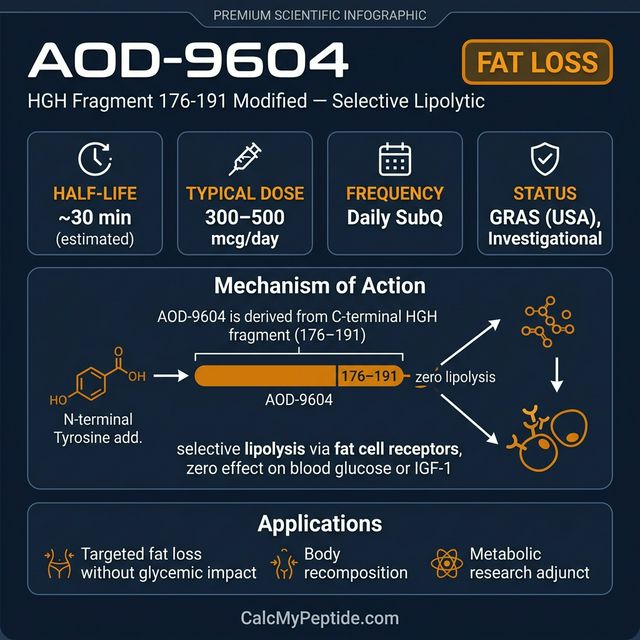
AOD-9604 is a modified fragment of human growth hormone (specifically amino acids 177-191 with a tyrosine addition). It was designed to isolate the fat-burning region of HGH without the anabolic, diabetogenic, or growth-promoting effects. AOD-9604 stimulates lipolysis (fat breakdown) and inhibits lipogenesis (fat formation) in adipocytes.
AOD-9604 does not affect blood sugar, does not promote muscle growth, and does not affect IGF-1 levels — making it unique among GH-related peptides. It has GRAS (Generally Recognized as Safe) status from the FDA for use as a food ingredient.
Source: PMID: 11713833
📜Background & History
AOD-9604 is a modified fragment of human growth hormone consisting of amino acids 176–191, with the addition of a tyrosine residue at the N-terminus (making it AOD rather than just fragment 176-191). Developed by Monash University researchers led by John Ng in Australia, it was designed to capture the lipolytic properties of GH without its diabetogenic effects. Phase III trials for obesity (Metabolic) were conducted in 2003–2007 but did not meet primary endpoints in the broadest population despite showing fat-specific effects. It received GRAS (Generally Recognized as Safe) status in the US.
🎯 Research Use Cases
- ✓Targeted fat loss without effects on blood glucose or IGF-1
- ✓Body recomposition with minimal metabolic side effects
- ✓Adjunct to GLP-1 protocols for fat oxidation support
💉 Dosing Protocol
| Typical Dose | 300-500 mcg/day |
| Frequency | 1× daily (fasted) |
| Half-Life | ~30 minutes (estimated) |
| Common Vial Sizes | 5 mg |
🧪 Reconstitution Example
⚠️Safety & Considerations
Has FDA GRAS status as a food ingredient. No reported significant safety concerns in studies. Does not affect blood glucose or IGF-1 levels. May cause mild injection site irritation.
⚡Interactions & Contraindications
Does not affect IGF-1 or blood glucose — safer metabolically than full GH. No significant drug interactions identified. Not for use with active cancer.
🔗Synergies & Common Stacks
GLP-1 reduces appetite and caloric intake; AOD-9604 independently stimulates lipolysis. Complementary fat loss mechanisms operating through different pathways.
Tesamorelin reduces visceral fat via GH; AOD-9604 targets subcutaneous and visceral fat directly. Additive lipolytic effects.
❓ Frequently Asked Questions
Is AOD-9604 the same as HGH Fragment 176-191?▼
What is the AOD-9604 dosing protocol?▼
📖 References
- Heffernan M, et al. “A randomized placebo-controlled dose-response trial of AOD-9604 in obese humans.” J Clin Endocrinol Metab (2001). DOI: 10.1210/jc.86.5.2198