Understanding Peptide Side Effects by Category
No peptide is side-effect-free. However, side effects vary dramatically by peptide category — a GLP-1 agonist has completely different considerations than a growth hormone secretagogue or a nootropic.
This guide categorizes side effects by peptide class, from most common to rare, and includes monitoring protocols and red flags that should prompt medical attention.
GLP-1 Agonists (Semaglutide, Tirzepatide, Retatrutide)
Most common (>10% incidence): Nausea (especially during dose escalation), diarrhea, constipation, decreased appetite, vomiting. These typically resolve after 4-6 weeks at each dose level.
Common (1-10%): Injection site reactions, headache, fatigue, dizziness, abdominal pain, GERD/reflux.
Uncommon (<1%): Pancreatitis (seek medical attention for severe abdominal pain radiating to the back), gallbladder disease, hypoglycemia (especially with insulin or sulfonylureas).
Contraindications: Personal or family history of medullary thyroid carcinoma (MTC) or MEN 2 syndrome. Pregnancy. Active pancreatitis.
Monitoring: Blood glucose (especially diabetics), lipase/amylase if GI symptoms persist, gallbladder imaging if RUQ pain.
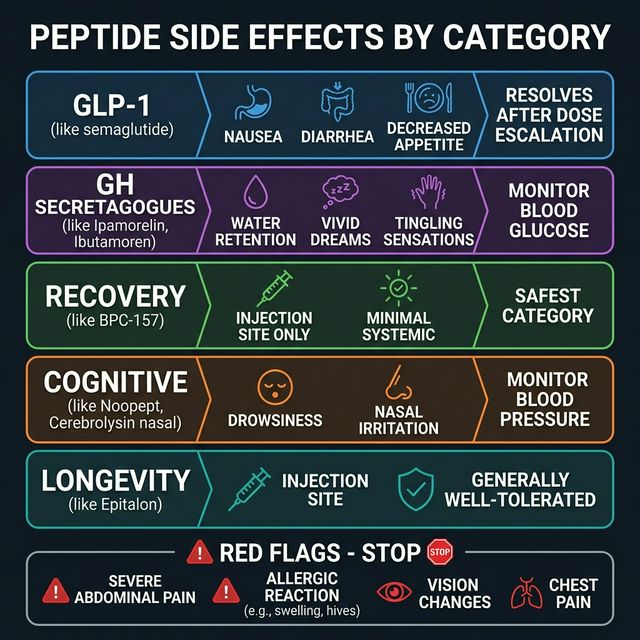
GH Secretagogues (Ipamorelin, CJC-1295, GHRP-6, MK-677)
Most common: Water retention (puffiness, especially in hands/face), increased appetite (GHRP-6 and MK-677 specifically), vivid dreams (often considered a positive sign of GH elevation).
Common: Tingling/numbness in extremities (carpal tunnel-like symptoms), mild joint stiffness, increased sleepiness, transient head rush after injection (especially with Mod GRF/CJC-1295).
Uncommon: Blood glucose elevation (monitor fasting glucose, especially with MK-677), cortisol/prolactin elevation (GHRP-2, GHRP-6, Hexarelin — not Ipamorelin).
Contraindications: Active cancer (GH/IGF-1 can promote tumor growth), uncontrolled diabetes, active carpal tunnel syndrome.
Monitoring: Fasting blood glucose every 4-6 weeks. IGF-1 levels periodically. HbA1c if using MK-677 long-term.
Recovery Peptides (BPC-157, TB-500)
Most common: Injection site irritation (redness, mild swelling at injection point). Generally considered the safest peptide category with minimal systemic side effects.
Uncommon: Mild dizziness shortly after injection, slight nausea (usually first few doses only), fatigue.
Theoretical concern: Both BPC-157 and TB-500 promote angiogenesis (new blood vessel formation). While beneficial for healing, this mechanism could theoretically support tumor growth in individuals with active cancer.
Contraindications: Active cancer or history of cancer within the past 5 years. Avoid during pregnancy/breastfeeding.
Monitoring: No specific lab monitoring typically required. Monitor injury recovery progress.
Cognitive/Nootropic Peptides (Selank, Semax, Dihexa)
Most common: Mild drowsiness (Selank), nasal irritation (intranasal peptides), mild headache.
Uncommon: Altered sleep patterns, emotional sensitivity changes, temporary changes in blood pressure.
Specific to Dihexa: Extremely potent — dose-dependent effects poorly characterized in humans. Proceed with extreme caution.
Monitoring: Blood pressure periodically. Subjective cognitive and mood tracking recommended.
Longevity/Mitochondrial Peptides (Epitalon, MOTS-c, SS-31)
Most common: Injection site irritation. Generally well-tolerated with decades of research (Epitalon).
Unique effects: Epitalon may improve sleep quality via melatonin pathway modulation — this is usually considered a benefit. MOTS-c may transiently affect blood glucose as it mimics exercise effects.
Monitoring: Blood glucose (MOTS-c), standard metabolic panel annually.
When to Stop: Red Flags
Seek immediate medical attention for:
• Severe abdominal pain radiating to the back (pancreatitis risk with GLP-1s)
• Allergic reaction: hives, swelling of face/throat, difficulty breathing
• Severe, persistent nausea/vomiting that prevents food/water intake
• Vision changes (especially with GH secretagogues)
• Severe injection site infection (expanding redness, warmth, pus)
• Chest pain or irregular heartbeat
Reduce dose or discontinue for: Persistent water retention, sustained blood glucose elevation, ongoing GI symptoms that don't resolve with dose adjustment, numbness/tingling that worsens.