
What Is the FDA Category 2 List and Why Does It Matter?
In November 2023, the FDA published an updated Bulk Drug Substances list dividing compounds into two categories. Category 1 substances are those the FDA has evaluated and determined can be safely compounded under the Federal Food, Drug, and Cosmetic Act. Category 2 substances are those that have been nominated for inclusion but that the FDA has determined raise significant safety or efficacy concerns — effectively restricting compounding pharmacies from producing them.
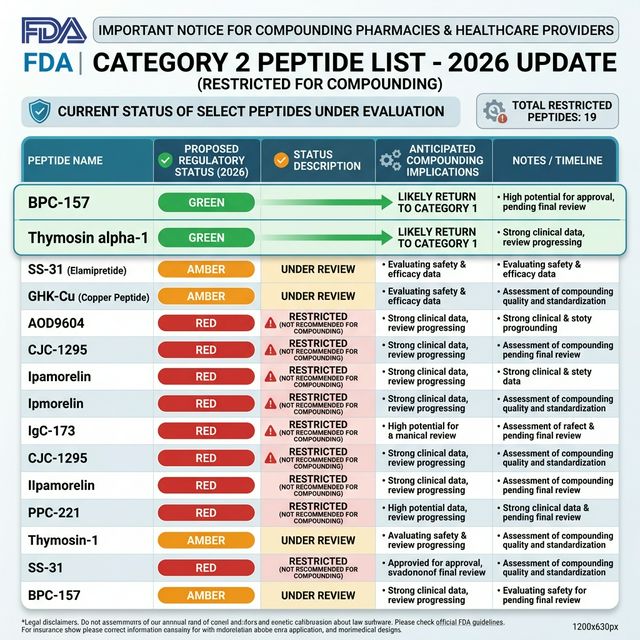
For the peptide community, this was seismic. The Category 2 list included 19 peptides that had been widely available through compounding pharmacies, including some of the most popular peptides in therapeutic use: BPC-157, thymosin beta-4 (TB-500), thymosin alpha-1, selank, semax, GHK-Cu, kisspeptin, AOD-9604, and ipamorelin. Overnight, pharmacies that had been legally compounding these peptides faced a regulatory prohibition.
The legal mechanism: under Section 503A and 503B of the FD&C Act, compounding pharmacies can produce medications using bulk drug substances on the Category 1 list. Substances on Category 2 are effectively off-limits for compounding — meaning physicians cannot prescribe them and pharmacies cannot produce them through normal compounding channels. The only legal access becomes clinical trials or individual patient INDs.
Which Peptides Were Placed on Category 2?
The full Category 2 list includes: BPC-157 (Body Protection Compound-157), thymosin beta-4 (TB-4/TB-500), thymosin alpha-1 (Tα1), selank, semax, GHK-Cu, kisspeptin-10, dihexa, AOD-9604, DSIP (Delta Sleep Inducing Peptide), epithalon (epitalon), follistatin, GnRH (gonadotropin-releasing hormone), IGF-1 LR3, ipamorelin, melanotan II, mots-c, PE-22-28, and tesamorelin.
Note that tesamorelin is FDA-approved (as Egrifta for HIV lipodystrophy) but was placed on Category 2 for compounding — meaning pharmacies cannot compound a generic version. Similarly, thymosin alpha-1 is approved in 35+ countries but carries an FDA Category 2 designation. The Category 2 designation does not mean the substance is dangerous; it means the FDA has not completed its evaluation for compounding safety or has raised concerns about insufficient data for pharmacy compounding without approved manufacturing controls.
Critically, this did not affect "research use only" peptides sold by research chemical vendors, which operate in a different regulatory space. The Category 2 list specifically restricts 503A and 503B compounding pharmacies from producing these peptides for patient use.
The 2026 Reversal: What Changed Under the New Administration
In February 2026, the political landscape shifted dramatically. Under the new HHS leadership and with strong advocacy from integrative medicine organizations, the FDA announced a review process that could move up to 14 of the 19 Category 2 peptides back to Category 1. The rationale cited by HHS leadership: the original Category 2 designations were based on insufficient evaluation rather than evidence of harm, and that restricting access to well-studied peptides (particularly thymosin alpha-1 with 11,000+ clinical trial subjects) was inconsistent with the available safety data.
As of March 2026, the review is ongoing with an expected decision by Q3 2026. The peptides most likely to return to Category 1 include thymosin alpha-1 (strongest clinical evidence), BPC-157 (extensive preclinical safety data), GHK-Cu (topical copper peptide with established dermatological use), and ipamorelin (clean selectivity profile in human data). The peptides with less certain outcomes include melanotan II (safety concerns around melanoma risk) and dihexa (limited safety data).
For practitioners and patients currently using these peptides through research channels, the Category 1 reinstatement would mean a significant upgrade: FDA-registered pharmacy quality, prescriber oversight, standardized manufacturing, and insurance billing potential.
What This Means for Your Access Right Now
During the review period (Q1-Q3 2026), the practical access situation is: (1) Compounding pharmacies generally cannot compound Category 2 peptides unless they have received specific FDA discretion or the peptide has been moved back to Category 1. (2) Research peptide vendors continue to operate under "research use only" designations, which are not affected by the Category 2 list. (3) Telehealth peptide clinics that previously prescribed compounded BPC-157, TB-500, etc., have largely pivoted to Category 1 alternatives or are awaiting the reinstatement decisions.
The best approach for patients: maintain your relationship with a knowledgeable prescriber who can guide you through the regulatory transition. If you are currently using research-grade peptides, understand that the Category 2 to Category 1 migration would give you access to pharmaceutical-grade versions with verified purity, potency, and sterility — a meaningful quality upgrade.
Track the FDA Category 2 review timeline through the FDA's Compounding Quality Center of Excellence and through professional organizations like the Alliance for Pharmacy Compounding. CalcMyPeptide will update this article as reinstatement decisions are made.